Pad See Ew vs Pad Thai: which noodles should you order?
10 July 2026 · 2 min read · Rim Thang Thai, Glenelg
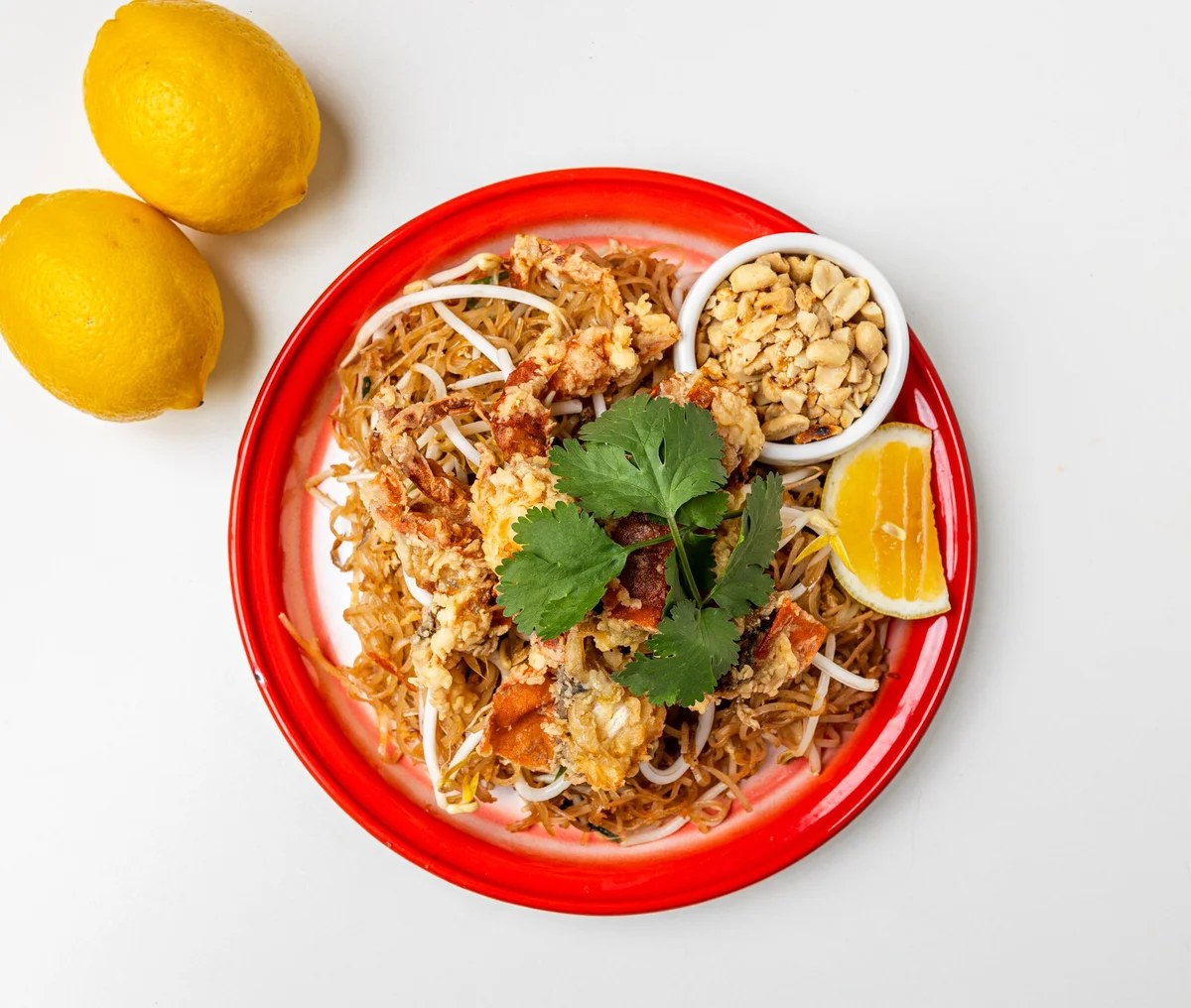
It's the fork in the road on every Thai menu: Pad Thai or Pad See Ew. Two plates of stir-fried rice noodles that share a wok and almost nothing else.
One is tangy, light and built on tamarind. The other is savoury, smoky and built on soy. Knowing the difference means you'll order the right plate for your mood — so here's an honest guide from the people standing at the wok.
The split starts with the noodle itself. Pad Thai uses thin rice noodles, delicate strands that drink up sauce. Pad See Ew uses wide, flat ribbons with enough chew to survive a hard sear. From there, the two dishes head in opposite directions.
Pad Thai: tamarind, thin noodles, fresh crunch
Pad Thai is the famous one, and fame has been rough on it. Done properly it isn't sweet or gluggy — it's balanced. Thin rice noodles are tossed fast with egg, garlic and a sauce built on sour tamarind, then finished with everything cold and crunchy: bean sprouts, chives, crushed peanuts, coriander and a slice of lemon to squeeze over at the table.
The result is bright and textured — every bite has soft noodle, crisp sprout and a peanut in it somewhere. Traditional Pad Thai is mild, too. The heat is yours to control, added at the table with chilli flakes.
Pad See Ew: soy, thick noodles, char
Pad See Ew literally means fried with soy sauce, and the name tells you most of what you need to know. Wide, thick rice noodles are stir-fried hard with egg, garlic and Chinese broccoli, so the soy caramelises on the edges of the noodles and picks up a smoky char from the hot wok. Cracked white pepper and coriander finish the plate.
Where Pad Thai is bright, Pad See Ew is deep. This is Thailand's great comfort food — the everyday lunch of office workers and school kids across Bangkok — savoury, gently sweet from the caramelised soy, and mild enough for anyone at the table. If you've eaten char kway teow in Malaysia or Singapore, you'll recognise the family resemblance: flat noodles, dark soy and smoke.
So which do you order?
There's no wrong answer, but there is a right one for tonight — and it depends on what you feel like eating, not on which dish is more famous:
- Craving something tangy, fresh and textured — Pad Thai.
- Craving something savoury, smoky and comforting — Pad See Ew.
- Ordering for kids or mild eaters — Pad See Ew is the safest plate on the menu.
- Want to judge a Thai kitchen — order both. Tamarind balance and wok char are hard to fake.
One wok, both noodles
Both dishes carry the same protein pricing on our noodle menu: vegetables and tofu or chicken at $19.50, prawns and calamari at $24.50, or the combination of chicken, prawns and calamari at $26.90. Plenty of tables order one of each and pass the plates around — the contrast makes both taste better.
We cook every plate to order, seven nights from 5PM. Come find us on Jetty Rd in Glenelg, or take the debate home as takeaway — Pad See Ew in particular travels beautifully.
Pad See Ew
from $19.50Stir-fried thick rice noodles with egg, garlic and Chinese broccoli, finished with cracked white pepper and coriander.